Anthony Thomas
Let us get the honest bit out of the way first.
The Walther PDP is a good pistol. Most owners shoot thousands of rounds without a single stoppage, and most reviewers end up praising the trigger, the grip, and the way the gun tracks.
So Walther PDP problems are not like the battery story on some optics, where one fault ruins the whole product. Here, the pattern is different. A reliable gun has a handful of recurring annoyances, and most of them trace back to your thumbs, your optic plate, or a gun that is simply running dry.
That is good news, because annoyances you can name are annoyances you can fix. Below are the six complaints that come up again and again, what actually causes each one, and what to do about it, in the order you should check things.
Quick verdict: Buy the PDP for the trigger and the ergonomics, and you will probably be happy. Just know three things before you pay. The long slide stop will punish a high grip until you adjust it.
Early optic plates were the weak point of the whole system, so check which cut your gun has. And the grip texture that feels so good at the range can chew at your skin if you carry the gun against your body all day.
None of that is a deal breaker. All of it is easier to deal with when you know it is coming.
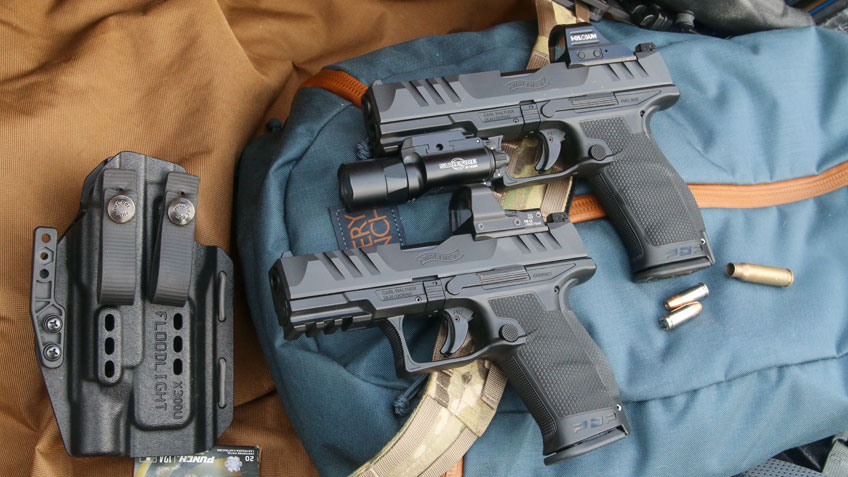
Table of Contents
Walther PDP Specs
Caliber: 9mm Luger. Action: striker fired.
Trigger: Performance Duty Trigger, 25 N pull per the manual, about 5.6 lb. Capacity: 15 rounds Compact, 18 rounds Full Size.
Barrel lengths: 4 inch, 4.5 inch, and 5 inch, polygonal rifling, stepped chamber. Frame: polymer with steel inserts.
Backstraps: interchangeable, small, medium, and large included. Sights: adjustable polymer sights, Glock pattern cuts.
Controls: ambidextrous slide stop, reversible magazine release. Optics: optics ready slide, one free plate on request from Walther, plate is not in the box.
Optic cut versions: 1.0 on early guns, 2.0 from 2022 onward, plates differ between cuts. Weight: Compact 4 inch about 24.4 oz with an empty magazine.
Walther PDP Problems at a Glance
Slide will not lock back, or locks back early. This is very common, and low to medium seriousness.
Yes, you can fix it yourself, because it is usually your thumb. It is free.
Optic plate loose, wrong, or missing. This is common on early guns, and medium to high seriousness.
You can mostly fix it yourself. It costs a free plate from Walther, or one aftermarket plate.
Failure to feed, chamber, or eject. This is occasional, and medium seriousness.
You can usually fix it yourself. It is free to clean and lube, or free under warranty if the gun is out of spec.
Snappy recoil for its size. This is a common complaint, and low seriousness.
You can partly fix it yourself. It costs free grip work, or one recoil spring.
Grip texture rubs in concealed carry. This is common for inside waistband carriers, and low seriousness.
Yes, you can fix it. It costs an undershirt, a sweat guard, or a grip sleeve.
Stock plastic sights are ordinary. This affects every gun, by design, and is low seriousness.
Yes, you can fix it. It costs one set of Glock pattern sights.
1. The Slide Will Not Lock Back on the Last Round
This is the most reported PDP complaint by a wide margin, and it is usually not the gun.
The PDP has long, ambidextrous slide stop levers. They are easy to reach on purpose, which makes fast reloads simple. The trade off is that a high, thumbs forward grip puts your support thumb right on top of the lever.
Hold it down while you shoot and the slide cannot lock open when the magazine runs dry. Push up on it under recoil and you can get the opposite trick, a slide that locks back with rounds still in the magazine.
The testing pattern is almost funny once you see it. Pew Pew Tactical shot about 600 rounds through a PDP F-Series with no malfunctions at all, and the only issue was the slide failing to lock back. Their bigger handed shooter had the problem.
His wife, shooting the same gun, did not. Gun University found the exact same thing in 600 rounds of their own. No failures to feed or fire, but the larger handed reviewer kept riding over the slide stop, and he says plainly that smaller handed shooters need not worry.
An owner on AR15.com put it in one line: the gun has been reliable as long as he does not ride the long slide stop, which he admits he often does.
How to tell if it is your thumb, and fix it
- Run the one magazine test. Load one round, keep your support thumb deliberately clear of the lever, and fire. If the slide locks back, your gun works. Your grip was the problem.
- Let someone else shoot it. If it locks back for them and not for you, you have your answer, and it costs nothing.
- Adjust your thumb, not the gun. Drop the support thumb a fraction, or curl it slightly off the frame. You do not need a new grip, just a small change in where that thumb rests.
- Try the other backstraps. A different backstrap changes where your hand sits, which can move your thumb off the lever without you thinking about it every shot.
- Only blame parts if everyone gets the same result. If the slide will not lock back for any shooter, with any magazine, check that magazine’s follower and spring first, then talk to Walther about the slide stop spring. Weak magazine springs are a real cause. They are just not the usual one on this gun.
2. Optic Plate Problems, Loose Plates, Wrong Plates, and No Plate in the Box
If the PDP has a genuine weak point, this is it, and it belongs to the early guns.
Owners of first generation pistols reported plates that sat loose in the cut, moving slightly forward and back, with a visible gap at the rear. A plate maker explaining the design on M4Carbine put his finger on why.
The first version of the cut has no channel to stop the plate shifting sideways and no lugs to stop it rotating, so the screws alone have to hold everything in place. Screws are not great at that job.
Walther fixed the design, not just the complaints. From 2022 onward the guns use the 2.0 cut, which adds lugs so the plate and optic are located by the slide itself and not held only by screw tension.
Reviewers of the newer steel frame guns call the 2.0 system a clear improvement over the old one, which they say did have problems.
Then there is the smaller, sillier problem. The plate does not come in the box. You get a voucher for one free plate from Walther, you order it, and you wait. Some plates go out of stock, so the wait can be real.
Plenty of new owners have brought home an optic ready pistol and a red dot, and then discovered they could not connect the two.
How to get an optic mounted properly on a PDP
- Work out which cut you have before you order anything. A 1.0 plate does not suit a 2.0 slide, and the other way round is no better. Check the cut shape against Walther’s guide, or ask Walther with your serial number handy.
- Claim your free plate first. It costs nothing, and on a 2.0 gun the factory plate is a solid part. Order it the day you buy the gun, not the day the optic arrives.
- Check the fit before you fit the optic. The plate should sit in the cut with no rocking and no gap at the rear. If it rocks on an early gun, that is a conversation with Walther, not a job for extra threadlocker.
- Use the right screws and the plate maker’s torque figure. Screws differ between plates and optics, and a screw that is too long can cause trouble of its own. Follow the figure that came with your plate. As an example of why you should check rather than guess, ZR Tactical lists 12.5 in-lb for its own PDP plate, and that number belongs to that plate, not to every plate.
- Witness mark and recheck. A small paint line across each screw head, then confirm your zero after the first range session and check the marks. If a mark has broken, a screw is moving, and you want to know now, not during a match or a class.
3. Failure to Feed, Failure to Chamber, and Stovepipes
Yes, PDPs stop sometimes. No, that does not make them unreliable, and the difference matters.
Work through the published tests and a pattern appears. In one comparison test, a PDP double fed. The testers checked the gun, found it dry, oiled it, and had no further issues at all.
They classed it as their own fault, which is honest and, in our view, correct. Another roundup notes stovepipes when the gun is run dry, cured by cleaning and oil.
Feeding guides for the PDP point at the same ordinary list: a magazine with a weak spring or damaged follower, soft or poor quality ammunition that cannot cycle the slide properly, a magazine that was not seated, and a loose grip during fast strings.
But there is one case you should know about, because it shows where the line is. Pew Pew Tactical tested a new PDP Pro-X and it failed to chamber again and again, on two different brands of ammunition, roughly twenty stoppages in about a hundred rounds, with the point of impact shifting as well.
That is not a dry gun and it is not a grip problem. Walther agreed something was out of spec, sent a shipping label, and had the same gun back in the reviewer’s hands within five days.
After the repair it ran 500 rounds with three failures, all on one type of ammunition.
The order to check a PDP that stops
- Seat the magazine like you mean it. Push it in hard and give it a tug. An unseated magazine is the most embarrassing cause on this list and one of the most common.
- Clean it and oil it. Follow the manual, lube the rails and barrel hood, and do not run this gun dry. If your stoppages vanish after oil, you have learned something cheap.
- Change the ammunition. Test with quality 124 grain factory ammo. If the gun runs on that and chokes on one soft load, believe the result.
- Swap the magazine. Shoot the same drill with your second magazine. A problem that follows one magazine lives in that magazine. Clean it, and replace a weak spring or damaged follower rather than fighting it.
- Know when to stop and call Walther. A new gun that will not chamber across different ammo and different magazines, in the numbers the Pro-X produced, is not a break in project. It is a warranty job, and on the evidence above Walther handles those quickly.
4. Snappy Recoil, More Than You Expect From a Gun This Size
Nothing is broken here. Plenty of owners still do not like how it feels.
The PDP is a fairly light, tall pistol, and reviewer after reviewer lands on the same word: snappy. Gun University calls the recoil more than you expect from a 9mm and snappy for a full size pistol.
Their F-Series reviewer felt the gun trying to move more in his hands than similar pistols. Another review lists moderately snappy recoil against similar models as a plain con. An AR15.com owner described the recoil impulse as weird. Not heavy, not painful, just off.
Gun University also offers the most specific explanation we found. They blame the stiff 18 lb recoil spring Walther fits, and report that dropping to a 15 lb spring removed the snappy feel entirely.
Their F-Series tester did the same swap and found the gun much smoother.
What actually helps, in order
- Grip it high and firm first. The PDP rewards a proper high grip, and the deep slide serrations and grip shape help you keep it. A lot of snappy is really the gun moving in a loose hold.
- Fit the largest backstrap you shoot well with. More contact with the frame means the recoil spreads out instead of concentrating in one spot.
- Try 124 grain ammunition. Many shooters find the gun settles better on it than on light, fast 115 grain loads. Cheap test, no parts involved.
- Consider the spring swap only with your eyes open. A 15 lb recoil spring is a known owner fix and it clearly works for the shooters above. It is still a tuning change. If you do it, test the gun thoroughly with the exact ammunition you carry, across several magazines, before you trust it. And if your PDP is a duty gun that has to stay factory standard, leave the spring alone and use steps one to three.
5. Grip Texture That Rubs You Raw in Concealed Carry

At the range, the Performance Duty Texture is a star. Your hand locks in, wet or dry, and the gun does not squirm. Owners and reviewers praise it constantly.
Against bare skin, in a waistband, for ten hours, it is a different story. One long term reviewer named it as his only complaint about the whole pistol. The texture is too aggressive for inside the waistband carry, he would prefer a more moderate option, and he notes that aftermarket grip makers largely do not cover the PDP, so you cannot simply swap the panels for softer ones.
Other reviews make the same point more briefly. Great control, may be uncomfortable carried close to the body.
How carriers actually solve it
- Put a layer in between. An undershirt, or a holster with a tall sweat guard that covers the grip, ends the rubbing for most people. This is the cheapest fix on this entire page.
- Carry it outside the waistband when you can. Duty use, range use, and open carry are where the stock texture is nothing but a plus.
- Tame the sides only. A rubber grip sleeve, or grip tape panels on the sides of the frame, takes the sharp edges off your skin while leaving the front and back of the grip biting into your hand, which is where the control comes from.
Do not sand the texture down. People do it, and then they own a slippery gun they cannot sell for what it was worth. Solve it with layers first.
6. The Stock Plastic Sights Are Ordinary
This is the least serious problem here, and the easiest to fix, so let us keep it in proportion.
The PDP ships with adjustable polymer sights with three white dots. One Pro model reviewer found the dots small and not as visible as the sights on competing guns, and noted the sights are too short to see through an optic, so there is no co-witness with the factory set.
American Rifleman’s reviewer dislikes polymer sights in general, and we are not going to argue with him. Plastic sights on a duty style pistol feel like the one place Walther saved money.
His next point is the useful one, though. Walther cut the slide for Glock pattern sights. That single decision means the biggest sight selection in the pistol world fits your gun, with no slide work and no weird proprietary dovetail to hunt for.
Upgrading PDP sights, simply
- Decide what the gun is for. Carried gun: steel night sights. Range and competition gun: a fibre optic front with a plain black rear is hard to beat for speed.
- Decide whether you run an optic. If you do, and you want backup sights you can actually use through the window, buy suppressor height sights. Standard height will sit too low, just as that reviewer found.
- Fit them, or have them fitted, and confirm your zero. Glock pattern does not mean you should drift steel sights in with a hammer and hope. A sight pusher or a gunsmith keeps the slide looking new.
Walther PDP Problems That Are Not Really Faults
The slide and frame rattle a bit. You can feel some play if you shake the gun. That play is designed in, it helps the pistol keep running when it is dirty, and it does not hurt accuracy.
Reviewers group these guns at around two inches at 25 yards, which is not what a sloppy gun does. Ignore it.
The trigger is not a competition trigger. Every so often someone calls the PDP trigger inconsistent. Set that against the weight of the evidence. Testers repeatedly call the Performance Duty Trigger one of the best factory striker triggers you can buy, and the Dynamic Performance Trigger on Pro models is measured at around 4 lb 14 oz to 5 lb 1 oz in published tests and praised for its crisp break and short reset.
If you are coming from a tuned competition gun, the stock trigger will feel heavy. That is a comparison, not a fault.
Magazines are not cheap. True, and worth knowing before you buy, because you will want more than the two in the box. It is a cost of ownership, like holsters that actually fit. It is not a reliability problem, so we have not given it a section of its own.
It will not lock back. Nine times out of ten, that is problem one above, and the part at fault is attached to your hand. Run the one round test before you start pricing springs.
Walther PDP Maintenance Checklist
- Clean and lube after long sessions, and do not run the gun dry. Several published stoppages ended the moment the gun got oil
- Keep one known good magazine marked, so you can isolate a feeding problem in minutes
- Note which optic cut your gun has, 1.0 or 2.0, and write it in your range log
- Witness mark optic plate screws and check them when you clean the gun
- Confirm zero after any plate, optic, or sight change
- If you change the recoil spring, test thoroughly with your carry ammunition before trusting the setup
- Try every backstrap at least once. The one that feels odd at the counter is sometimes the one that fixes your grip at speed
Is the Walther PDP Still Worth Buying?
Yes, and more comfortably than some pistols we have covered in this series.
Most of what owners complain about is either free to fix, like your thumb position and a dry gun, or a one time purchase, like better sights or the right optic plate. The one case in our research where a gun was genuinely wrong, a new pistol that would not chamber at all, Walther took it back, fixed it, and returned it inside a week.
That is what you want to hear about a company before you buy its product.
Buy it if you want one of the best factory triggers in a polymer pistol, a grip that suits a lot of different hands, and a gun that was designed around a red dot from the start. Think twice only if you carry inside the waistband against bare skin all day and you hate wearing an undershirt, or if you are looking at an early gun with the 1.0 optic cut at a price that pretends it is a new one.
On an early gun, check that plate fit carefully and price the gun accordingly.
Conclusion
Walther PDP problems are real, but they are the manageable kind.
Your slide will not lock back until you move your thumb. Your optic plate needs checking, and on an early gun it needs watching. The gun wants oil, it kicks a little more than its rivals, the grip will rub you if you carry it against skin, and the plastic sights deserve replacing.
Work through that list once, in that order, and what you are left with is the pistol most owners describe anyway. Accurate, comfortable, and boringly dependable, with a trigger that makes other factory guns feel like hard work.
That is a short list of fixes for a gun you can shoot for years. Do the cheap ones first, and you may find, like a lot of PDP owners, that there was never much wrong with it in the first place.
Sources used for this article: the Walther PDP manual, Pew Pew Tactical reviews of the PDP Pro-X and PDP F-Series and its PDP Match comparison test, Gun University reviews of the PDP, PDP Pro-E, and PDP F-Series, American Firearms long term PDP review, American Rifleman PDP review, Guns.com PDP Match Steel Frame review, M4Carbine optic plate discussion, AR15.com owner reports, and problem roundups from GunAnalyst, GunsAdvisor, Craft Holsters, and CYA Supply. Last updated: October 2026.