Anthony Thomas
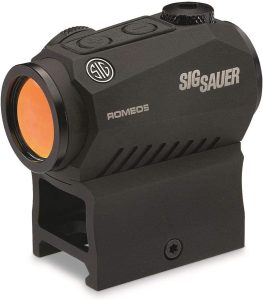
If you ask a range full of AR owners about budget red dots, the Romeo5 is the one that keeps coming up, so it makes sense that sig romeo 5 problems is one of the most searched phrases in the category. This little 1×20 tube sight has sold in enormous numbers. It is cheap, it takes a common CR2032, it wakes up when you pick the rifle up, and it comes with a proper co-witness riser in the box. For a lot of shooters it was their first red dot.
Here is the honest shape of the problem list. The Romeo5 does not have a design flaw that ruins it. What it has is a battery cap that owners under tighten, a mount that only works if you actually clamp it, a motion sensor with two behaviours nobody explains at the counter, and a counterfeiting problem that has nothing to do with Sig’s factory at all. Most of this article is five minute fixes. The rest is knowing what you bought.
One clarification, because the Romeo name covers a family now. This article is about the standard Romeo5, the CR2032 model with the side battery cap and the plain 2 MOA dot. The Romeo5 XDR is a different variant that runs on a AAA battery and offers extra reticles, and it has its own problems article on this site. The newer Romeo5 Gen II, which moved the controls to the top of the housing, is different again.
Quick verdict: The standard Romeo5 is still the budget tube dot to beat, and its real world problem list is shorter than its reputation suggests. Tighten the battery cap like you mean it, mount the riser properly, and learn what MOTAC is actually doing, and you have covered most of everything owners report. What is left is a slight lens tint and the risk of buying a fake, and both are solved before the first shot, not after it.
Table of Contents
Sig Romeo 5 Specs at a Glance
| Specification | Sig Romeo 5 (standard model) |
|---|---|
| Reticle | 2 MOA red dot |
| Magnification | 1x, 20mm objective |
| Housing | Cast aircraft grade aluminium |
| Battery | One CR2032, side loading |
| Battery life | 40,000+ hours claimed, with MOTAC |
| Activation | MOTAC motion activation, sleeps after about 2 minutes still |
| Brightness | 10 settings, 8 daylight and 2 night vision |
| Controls | Two buttons on the side of the housing, press to step, hold to switch off |
| Footprint | Aimpoint Micro pattern |
| Mounts included | 1.41 inch absolute co-witness riser, low mount on select versions |
| Adjustment | 0.5 MOA per click, capped turrets |
| Adjustment travel | About 100 MOA each way |
| Weight | About 5 oz with the riser mount |
| Waterproofing | IPX7, rated to 1 metre |
| Warranty | Sig Infinite Guarantee, with 5 year cover on electronics |
A note on those numbers. Sig’s 40,000 hour battery figure assumes MOTAC is doing its job and you are not parked on the brightest settings, so treat it as a best case, not a promise. Listings showing 12 brightness settings or a different click value are describing the Gen II or another Romeo variant.
Sig Romeo 5 Problems at a Glance
| Problem | How common is it? | How serious? | Can you fix it yourself? | Cost to fix |
|---|---|---|---|---|
| Flickering dot, dot dies under recoil | Most reported electrical issue | Medium | Yes, almost always | One fresh CR2032 |
| Zero shifts or will not settle | Occasional, usually the mount | Medium | Yes | Free, or a better mount |
| MOTAC sleeps or stays awake unexpectedly | Common confusion | Low to medium | Yes | Free, settings and habits |
| Turret caps are awkward and easy to lose | Common gripe | Low | Yes | Free, use the tool in the box |
| Lens tint, reflections, dot blooms on max | Every unit to some degree | Low | Partly | Free, brightness discipline |
| Counterfeit Romeo5s for sale | A real risk at silly prices | High if you get one | Prevent it, yes | Buy genuine first time |
1. The Dot Flickers, Cuts Out, or Will Not Turn On
Start with the problem that generates the most panicked forum posts, because it also has the happiest ending. A Romeo5 dot that flickers while you shoot, blinks out between shots, or refuses to light up at all is almost never a dead sight. It is a battery that is not making clean, constant contact.
The dedicated problem guides for this sight list the causes in the same order every time: loose battery connection first, dirty contacts second, a cheap or expired battery third, and actual internal faults a distant last. Sig’s own manual language says the quiet part out loud: a battery cap fitted without enough tightness can work loose under recoil and cut power to the dot. The cap is a coin slot design on the side of the housing, and finger tight plus a hopeful quarter turn is not always enough once the rifle starts cycling.
Then there is the sneaky one. A long term review by a US Army Ranger who ran this sight for years found adhesive residue left on his battery contacts from the pull tabs on new coin cells. The residue is clear. You cannot see it. His Romeo5 did exactly what yours is doing, and the fix was a fingertip check and a wipe. Add the last owner error: brightness steps with short presses, and holding a button down for over a second switches the sight off by design. Owners hold the plus button expecting the dot to climb, watch it vanish, and conclude the sight died in their hands. It did not. That is the off switch working as designed.
How to fix a flickering Romeo5 dot
-
Swap in a fresh, name brand CR2032. Not the cell that came in a bulk card of twenty for the price of a coffee. Weak and out of date coin cells are a standing cause of flicker on this sight, and a known good battery removes the biggest variable in one step.
-
Clean the contacts before the new battery goes in. Wipe the contacts in the compartment and both faces of the cell with a dry cloth or cotton bud. Run a fingertip across them. If you feel anything tacky, that is tab adhesive, and it has to come off.
- Fit the cap snug with a coin. The cap needs to be properly tight, not finger hopeful. Use a coin in the slot and snug it down firmly. It is also your waterproof seal.
- Learn the buttons. Short presses step the brightness. A hold of over a second turns the sight off, and the same hold turns it back on. If the dot is missing on a new sight, hold the plus button once, then step it up, because plenty of these arrive turned down too low to see in daylight.
- Test it honestly. Shoot a full magazine. A dot that still flickers on a fresh battery, with clean contacts and a tight cap, has earned a call to Sig. That is a warranty conversation, and it is the one step in this section with no product to sell you, deliberately.
2. The Zero Wanders, and It Is Usually the Mount
The second most common Romeo5 complaint is a zero that will not stay where you put it. Groups print in one place on Saturday and somewhere else on Sunday, and the sight gets the blame because it has the logo on it.
Slow down and look at how this sight actually attaches. The optic sits in a riser, the riser clamps to the rail with a single Torx crossbolt, and that stack gives you three interfaces that can all move a little: sight to riser, riser to rail, and the rail itself on some rifles. Reviewers who tested the included riser found it sturdy and rattle free, and long term owners hold zero for years on it, so the mount is not junk. But a crossbolt nipped up by feel, a riser not pushed forward against a rail slot, or a riser sitting on a dirty or painted rail will walk under recoil, and every step it walks moves your zero.
It also matters which box you bought. The co-witness riser comes with every Romeo5, but the low profile mount is only in select versions, which is why mounting one on a shotgun sometimes starts with an unplanned shopping trip.
How to make a Romeo5 hold zero
- Strip the mount and start again. Take the sight and riser off the rail. Clean the rail, the riser foot, and the crossbolt. Dirt, oil, and thick paint under a mount are a zero shift waiting for recoil.
- Seat the riser against a slot and push it forward. The crossbolt should sit hard against the front face of a Picatinny slot, so recoil drives the mount into the slot instead of skating it backward. Then tighten the crossbolt firmly and evenly with the Torx tool in the box.
- Mark it. A paint pen line across the crossbolt head and riser tells you at a glance whether anything has moved. No movement and a shifting zero means the problem is elsewhere. Movement means you just found it.
- Confirm with groups, not hope. Zero from a solid rest, then shoot a confirmation group after the rifle has been transported and knocked around the way your rifles actually live.
- Upgrade the mount if the stack keeps moving. The Romeo5 uses the Aimpoint Micro footprint, the most supported mount pattern in the industry. A quality one piece QD mount removes the riser interface entirely and goes off and back on repeatably.
3. MOTAC Does Things Nobody Explained to You
MOTAC, Sig’s motion activated illumination, is the feature that makes the 40,000 hour battery claim possible, and it is also a small source of confusion that follows this sight around. The behaviour is simple once somebody tells you. Leave the rifle still for about two minutes and the dot switches itself off. Touch the rifle and it is back instantly, at the same brightness you left it on. That is the whole system.
The first surprise is the rifle that never sleeps. Vibration counts as motion, so a Romeo5 on a rifle that lives on a quad bike or in a ranch truck will stay awake for most of the day and eat its battery at working brightness instead of sipping it in standby. The Ranger review of this sight flags exactly that pattern and gives the intended answer: the sight has a full off. Hold either button for over a second and it stays off until you turn it on. That is the correct setting for transport and storage.
The second surprise is the opposite one. An owner grabs the rifle, finds no dot, and decides the motion sensor has failed. Sometimes it has simply been switched fully off and forgotten. Sometimes the battery is too weak to run the sensor and the LED reliably, which presents exactly like a sensor fault. Genuine motion sensor failures do get reported, and they are real, but they are the third explanation you should reach for, not the first.
How to get MOTAC working for you
- Test the sleep cycle once, on purpose. Turn the sight on, set the rifle down, and wait. The dot should be gone after about two minutes of stillness and back the instant you lift the rifle.
- Switch it fully off for vehicles and storage. If the rifle rides anywhere that vibrates, hold a button down and turn the sight off before the journey. One second of button holding buys weeks of battery life.
- Suspect the battery before the sensor. A dot that will not wake, or wakes dim and dies, on an old cell is a battery story until proven otherwise. Fresh CR2032 first, judgement second.
4. The Turret Caps Double as Tools, and They Are Not Good Tools
Under the Romeo5’s windage and elevation caps you will find slotted adjustment dials that click in half MOA steps, with about 100 MOA of travel in each direction, which is more than any sane zero will ever use. The clicks themselves are fine. Multiple reviewers call them tactile and easy to count. The argument is with the caps.
Sig designed the caps to be the adjustment tool. Unscrew one, flip it over, and the protrusion inside fits the dial slot. In practice, a detailed two reviewer test found the caps genuinely hard to use that way: the fit is fine, but the effort needed leaves the knurling printed into your skin, and the Torx wrench from the box or a small flathead does the job better every time. Owners with reduced grip strength feel this design decision the most, and they are not wrong to complain.
The caps have a second, dumber failure mode. They are small, they are separate, and ranges are large. A cap set down on a shooting bench mid zeroing session has a life expectancy measured in minutes, and the sight’s sealing depends on those caps being back on afterward.
How to zero a Romeo5 without fighting it
- Use a real tool. The included Torx wrench or a small flathead turns the dials with control. Keep the cap in your other hand or a pocket while you adjust, never on the bench.
- Work in clicks, from a rest, and write the count down. Half MOA per click means four clicks move the point of impact about an inch at 50 yards. Counted clicks beat guesswork and a wandering zero session.
- Caps back on, snug, before the rifle leaves the bench. The caps keep water and grit out of the adjustment mechanism. Finger tight plus a nudge is the target. Cranking them down with a tool is how threads get hurt.
- Check you are turning the right dial. Elevation is on top, windage is on the side, and the direction arrows are printed on the housing for a reason.
5. Lens Tint, Reflections, and a Dot That Blooms on Maximum
Look through a Romeo5 next to a premium micro dot and you will see the budget in the glass, honestly and without much drama. Several independent reviews of the original model describe the same slight blue tint, in almost the same words: a blue cast when you first mount up that your eye adjusts to within minutes, a slight tinge indoors, a tint you stop registering once you start shooting. One reviewer reported no noticeable tint at all, so the fair summary is slight and variable between units and eyes, not a defect and not imaginary. The coating that causes it is also what gives the red dot its contrast, so it is a trade Sig made on purpose.
Two related complaints deserve separating from the tint. The first is reflection: at least one careful review noted a red reflection from the front lens, and a budget coated front lens can throw a visible glint from downrange angles. For a duty or defensive gun, that is worth knowing. The second is bloom. On its highest setting the 2 MOA dot can flare badly enough that one tester found it nearly covered a man sized target at 75 to 100 yards. That is not a broken LED. That is a small dot being driven far harder than the light around it needs.
How to get the cleanest picture from a Romeo5
- Run the lowest brightness you can clearly see. This fixes bloom completely and helps astigmatic eyes too. Maximum is for bright sun on light coloured backgrounds, and almost nothing else.
- Step down one from where your instinct lands. One click down costs nothing in visibility and buys you a round dot instead of a star.
-
Keep the glass clean and dry. Smears and dust exaggerate both the tint and any flare. Blow dust off first, then use the cloth from the box. A dry shirt tail is a scratch with good intentions.
-
Judge the tint on a target, not a wall. Owners overwhelmingly report the tint vanishing as a topic the moment the targets come out.
6. Counterfeit Romeo5s Are a Real Problem
The last problem on this list is the only one Sig cannot fix in its own factory, because the sights in question never went near it. The Romeo5 is one of the most counterfeited budget optics in circulation. A problems guide for this sight names buying a fake as one of the two most frequent Romeo5 problems outright, alongside battery trouble.
The most useful account comes from a buyer whose Romeo5 looked right. Construction, finish, and markings all appeared authentic, and he only questioned it later. Sig asked him for photographs of the emitter seen through the rear window, the top of the optic, the open battery compartment with the battery removed, and the serial number under the mounting plate. Their verdict was counterfeit, and the specific reason they gave was that the emitter was wrong. The fakes are good enough that the manufacturer authenticates them from internal details and a serial number, not from the box art.
A counterfeit matters beyond pride: unknown manufacture, unknown sealing, and no warranty, on a sight whose whole appeal is that it works. If yours behaves strangely and nothing here fixes it, the uncomfortable possibility belongs on your list.
How to avoid buying a fake Romeo5
- Buy the seller before the sight. Authorised dealers and Sig’s own channels are the safe route. A price far below every legitimate listing is not a deal, it is the product telling you what it is.
- Be suspicious of marketplace bargains and resold “new” units. Counterfeits move through auction sites and buy and sell groups precisely because the buyer cannot check anything before paying.
-
Check a suspect unit the way Sig does. Photograph the emitter through the rear window, the top of the housing, the open battery compartment, and the serial number under the mount, then contact Sig Electro-Optics support. They will tell you what you have.
-
Send a confirmed fake back through the platform. Use the marketplace’s counterfeit reporting and refund process. Do not zero it, mount it on a defensive gun, or pass it on.
Sig Romeo 5 Problems That Are Not Really Faults
The sight feels asleep when you grab it. That is MOTAC’s two minute sleep doing its job, and it wakes the moment the rifle moves. If yours takes a deliberate shake to wake, check the battery before blaming the sensor.
Perceived parallax at close range. Owners sometimes report the dot shifting against the target as they move their head. The Romeo5 has very low parallax by design, and most reports trace back to inconsistent cheek weld behind a 20mm window. A repeatable head position fixes most of it.
The window feels small. It is a 20mm tube in the Aimpoint Micro tradition, not a big window pistol dot.
The bikini lens cover feels cheap. It does, and more than one reviewer has predicted it will be the first casualty of ownership. It still keeps dust off the glass, and losing it costs the sight nothing but tidiness.
Sig Romeo 5 Maintenance Checklist
- Battery cap snug with a coin after every battery change, contacts wiped clean
- Fresh CR2032 yearly on a working gun, spares kept with the rifle
- Crossbolt and riser checked and paint marked after mounting
- Confirmation group shot after any remount or hard transport
- Fully switched off for vehicle transport and long storage
- Turret caps back on snug after every adjustment session
- Brightness set one step below your instinct
- Lenses blown off, then wiped with the cloth, never a shirt
Is the Sig Romeo 5 Still Worth Buying?
Yes, and for most shooters it is not a close call. Do the maths on this article. The worst electrical problem is a cap that needs a coin and a fresh battery. The worst mechanical problem is a mount that needs mounting properly. The worst optical problem is a slight tint and the discipline to not run the dot on maximum. Set against that: torture testing that submerged this sight in a bathtub with the dot lit and watched it come out working, drop testing onto rock with nothing but scuffs, four year reviews concluding the dot stayed honest, and a support operation owners describe as replacing faulty units without a fight. The genuinely sharp edges are the electronics warranty, five years rather than forever, and the counterfeit market, which is a buying problem rather than a product problem.
Buy a genuine one from a real dealer, mount it like you read section two, and this is still the sight that made every other budget dot justify itself.
FAQs About Sig Romeo 5 Problems
Q: What are the most common sig romeo 5 problems?
A: A flickering or dying dot caused by battery cap and contact trouble is the most reported, followed by zero shifts that trace back to the riser mount being under tightened, MOTAC confusion, awkward turret caps, and a slight blue lens tint. The serious risk is not mechanical at all: counterfeit Romeo5s are common at too good prices, so where you buy matters.
Q: Why does my Romeo5 dot flicker when I shoot?
A: Almost always power delivery. Work through it in order: fit a fresh name brand CR2032, clean the contacts and check for clear adhesive residue from battery pull tabs, then snug the battery cap down with a coin. Sig warns that a loose cap can work looser under recoil and cut power. A dot that still flickers after all three is a warranty case.
Q: What is the difference between the Romeo5 and the Romeo5 XDR?
A: They are different variants, not trim levels. The standard Romeo5 in this article runs on a side loading CR2032 and has a single 2 MOA dot. The XDR runs on a AAA battery and offers selectable reticles, including circle dot options. Battery advice and several fixes differ between them, which is why the XDR has its own separate problems article on this site.
Q: How long does a Romeo5 battery actually last?
A: Sig claims over 40,000 hours in normal use with MOTAC, and MOTAC does the heavy lifting by sleeping the sight after about two minutes of stillness. Real life depends on brightness and how much the rifle vibrates day to day. On a house or range gun, owners go years between batteries. Change it yearly on a defensive gun and the question answers itself.
Q: Why will my Romeo5 not turn on?
A: First, hold either brightness button for over a second, because a hold is the on and off switch. Step the brightness up in case it is set too low to see. Then fit a fresh battery, clean the contacts, and snug the cap. If it stays dead through all of that, contact Sig support.
Q: Does the Romeo5 hold zero?
A: In long term testing and most owners’ experience, yes. The zero complaints that surface usually trace to the mount: a crossbolt tightened by feel, a riser not seated forward against a rail slot, or a dirty rail. Mount it as described in this article, paint mark the crossbolt, and confirm with a group after transport. A sight that still walks with a proven mount is a warranty return.
Q: How can I tell if my Romeo5 is fake?
A: The convincing fakes cannot be spotted reliably from the box or the finish. Sig authenticates suspect units from photographs of the emitter through the rear window, the top of the optic, the open battery compartment, and the serial number under the mounting plate. Send those to Sig Electro-Optics support and they will tell you. A price far below authorised dealers is the earliest warning sign.
Conclusion
Most sig romeo 5 problems turn out to be small, specific, and already solved by the person on the next firing point.
A coin on the battery cap. A crossbolt seated into its slot and marked with paint. One button held for a second before the rifle goes in the truck. Brightness one click below instinct. None of it is glamorous. The design earned its reputation the slow way, through bathtubs, drop tests, freezers, and four year reviews, and its real weaknesses are the kind you can live with at this price.
Buy it genuine, set it up once with care, and then do the thing this sight was built for: forget about it for years at a time.
Sources used for this article: the Sig Sauer ROMEO5 operator manual, a long term Romeo 5 review by a US Army Ranger at Top Firearm Reviews, problem guides from RedDotHeaven, BestRedDotSight and The Wild Hunter, hands on reviews from WeaponsMan, CAT Outdoors, Pew Pew Tactical, ProArmory and High Ground Media, AR15.com owner threads, and marketplace owner accounts of counterfeit verification. Last updated: October 2026.