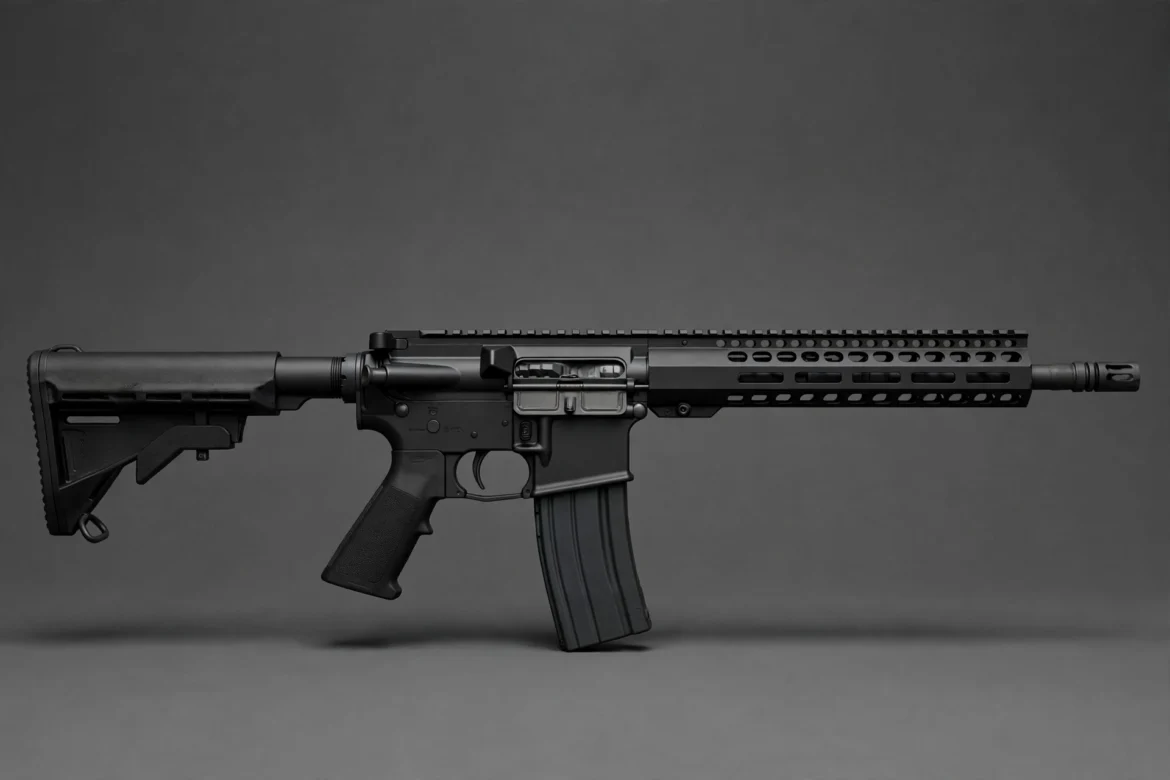
The Ruger AR-556 MPR might be the best value AR-15 Ruger has ever sold.
For about a hundred dollars more than the basic AR-556, you get an 18 inch cold hammer forged barrel, a rifle length gas system, a proper two stage trigger that most rifles at twice the price would be proud of, a 15 inch free float M-LOK handguard, and Magpul furniture. Reviewers loved it. Owners mostly love it too.
Ruger AR-556 MPR problems are real, though, and they follow an unusual pattern. This is not a rifle with one design flaw that affects every gun. It is a rifle where a slice of early production had genuine quality control trouble, documented in more detail than almost any rifle story we have covered, plus a handful of traits every owner meets: a taste for full power ammunition, a muzzle brake that will make you unpopular at an indoor range, and the small matter of the rifle arriving with no sights at all. Here is the whole picture.
Quick verdict: A good MPR is a soft shooting, accurate rifle that embarrasses guns costing far more, and most of them are good. The catch is inspection. A minority of early rifles left the factory with crooked buffer tubes, binding carriers, and alignment problems, and you can catch nearly all of it in five minutes at the gun shop counter before you pay. Check the rifle, break it in on full power 5.56, and budget for sights, because Ruger did not include any.
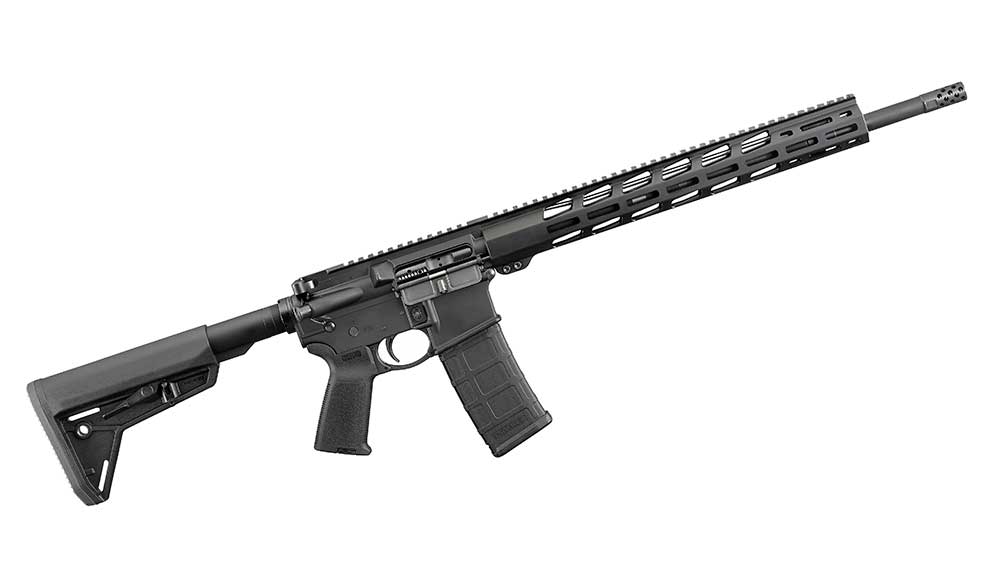
Ruger AR-556 MPR Specs
Caliber: 5.56 NATO, also shoots .223 Remington. Barrel: 18 inch cold hammer forged 4140 chrome moly steel.
Twist: 1:8 inch, 5 groove. Muzzle thread: 1/2×28, Ruger radial port muzzle brake fitted.
Gas system: rifle length, direct impingement. Handguard: 15 inch free float aluminium, M-LOK.
Trigger: Ruger Elite 452 two stage, 4.5 lb pull. Furniture: Magpul MOE SL stock, Magpul MOE grip.
Receivers: forged 7075 T6 aluminium, hard coat anodized. Bolt: 9310 alloy steel, shot peened and proof tested.
Magazine: one 30 round Magpul PMAG. Sights: none fitted, flat top optics rail.
Overall length: 35 to 38.25 inches. Length of pull: 11.1 to 14.4 inches.
Weight: 6.8 lb without magazine. Launch price: $899 MSRP.
Ruger AR-556 MPR Problems at a Glance
Short stroking on weaker ammunition. This is a common complaint, and medium seriousness.
You can usually fix it yourself. It costs ammunition choice, or free under warranty.
Failure to feed and double feeds. This is occasional, and medium to high seriousness.
You can usually fix it yourself. It costs lubrication and magazine testing, mostly free.
Bad batch quality control faults. This affects a minority of early rifles, and is high seriousness on affected rifles.
No, and do not try to fix it yourself. It is free, return to Ruger or the importer.
Multiple shots per trigger pull. This is rare, but reported, and a very high safety issue.
No, do not fix it yourself. It is free under warranty, stop shooting it.
Muzzle brake noise and dust. This affects every rifle, by design, and is low to medium seriousness.
Yes, you can fix it yourself. It costs a flash hider if it bothers you.
No sights in the box, one magazine. This affects every rifle, by design, and is low seriousness.
Yes, buy some. It costs the price of sights and spare magazines.
1. Short Stroking and Failing to Lock Back on Weaker Ammunition
The MPR’s rifle length gas system is the reason it shoots so softly. It is also where the most common running complaint starts.
The best documented version comes from Finland, where the MPR became popular with competitive and reservist shooters, and where owners pooled their experiences on the national firearms forum. Several of them describe the same behaviour in new rifles.
Failures to feed in the opening rounds, because the bolt carrier was not travelling far enough back to pick up the next round. Occasional failures to eject.
And rifles that would not lock open on an empty magazine, with the problem showing up most on S&B, GG&G and Barnaul ammunition. Problem roundups of the MPR in the US point the same way and list under gassing at the top of their diagnosis tree.
Understand what is happening and it stops being mysterious. A rifle length gas system on an 18 inch barrel is tuned to be gentle, and gentle systems have less spare energy.
Full pressure 5.56 NATO runs them happily. Milder .223 loads, and steel cased ammunition loaded to modest pressures, sit closer to the edge, especially in a brand new rifle with tight, dry parts.
The bolt comes back almost far enough. Almost gives you a stovepipe, a failure to feed, or an empty chamber with the bolt closed because the carrier never reached the bolt catch.
How to fix an MPR that short strokes
- Break it in on full power 5.56 NATO. Not the mild .223, not the steel case. A few hundred rounds of proper 5.56 smooths the action, seats everything, and gives the gas system the pressure it was tuned for. Judge the rifle after that, not before.
- Run the bolt carrier group wet. New ARs ship dry, and a dry carrier in a new rifle adds exactly the friction a gentle gas system cannot spare. Strip it, clean off the factory preservative, and lubricate the contact surfaces generously for the first few hundred rounds.
- Test lock back properly. One round in the supplied PMAG, full power ammunition, fire, and the bolt should lock open. Repeat with your other magazines. A rifle that locks back on 5.56 but not on mild .223 is telling you about ammunition, not about itself.
- If it short strokes on full power 5.56, check the gas system once. Gas key bolts tight and staked, gas rings healthy, gas block in place. Find something loose, fix that one thing.
- Still short stroking on 5.56 after all that? It goes to Ruger. Do not start drilling gas ports or swapping buffers in circles on a rifle with a warranty. Under gassed from the factory is Ruger’s problem to solve.
2. Failure to Feed and Double Feeds
In the Finnish owners’ reports, the problem rifles did not only cycle weakly. They jammed in the classic AR ways: rounds failing to feed, and in one case a first batch rifle that stopped after two shots with a cartridge wedged sideways between the bolt and the feed ramp.
US problem roundups of the MPR list double feeds as well, two rounds trying to occupy the chamber’s personal space at once.
Most feeding trouble on an MPR is not exotic, and the order you check things in matters more than any single fix.
How to fix MPR feeding problems
- Isolate the magazine. Mark every magazine you own with a number. Shoot them one at a time and write down which ones misbehave. In the Finnish reports, magazine behaviour varied oddly by brand, in one rifle PMAGs ran normally while metal GI pattern and HK magazines were troublesome in that particular gun. The supplied PMAG is your control magazine. A fault that follows one magazine is a magazine fault.
- Lubricate, then reassess. Half the double feeds reported on new ARs anywhere are a dry gun plus a stiff new magazine spring. The single round test helps here: load one round, fire it, and the rifle should eject cleanly and lock open. If it does that ten times in a row, extraction and cycling are fine and your problem lives in feeding.
- Inspect the extractor. A chipped extractor claw or a weak extractor spring gives you the extraction failures that turn into double feeds, because the spent case never leaves and the next round arrives to meet it. Extractor springs and inserts are cheap, standard AR parts.
- Feed it real ammunition while diagnosing. Steel case and budget loads are fine for practice once the rifle is proven. While you are chasing a feeding fault, they add a variable you do not need.
- Persistent double feeds on good magazines and good ammunition go back to Ruger. That combination means the fault is in the rifle, in the feed ramps, the chamber, or the fire control timing, and none of those are kitchen table jobs on a warrantied rifle.
3. The Bad Batch: Crooked Buffer Tubes, Stiff Carriers, and Receivers That Do Not Line Up
This section is why the Finnish story matters, and it is worth telling properly, because it turns into the most useful buying advice in this article.
When the MPR reached Finland, about 120 rifles were imported. The local shooting community is small, organised, and required by law to shoot actively, so when rifles misbehaved, the owners compared notes in one place.
Their compiled list covered at least 10 rifles with more serious function problems, and the findings went well beyond ammunition sensitivity. Buffer tubes fitted crooked.
Bolt carriers that moved very hard by hand. One rifle where the upper receiver sat visibly offset from the lower, leaving uneven gaps, about 1 mm on one side and 3 mm on the other, and making metal magazines hard to insert and unwilling to drop free, while PMAGs worked.
A carrier that stuck on the edge of the misaligned buffer tube. That rifle went back to the importer.
The encouraging detail: one owner whose rifle had the buffer tube reinstalled correctly reported that it then ran, apart from refusing to lock back on Barnaul steel case. Straighten the geometry and the rifle worked.
So the lesson is not that MPRs are badly made. The lesson is that early production had real quality control spread, some rifles left the factory assembled badly, and the faults are all visible or feelable before you fire a shot.
Your five minute MPR inspection, at the counter or on delivery
- Cycle the action by hand, slowly. It should run smoothly front to back with even resistance. Grinding, sticking, or a carrier that hangs up near the rear of its travel is a reject, not a break in project.
- Look down the buffer tube. With the stock extended, sight along the rifle. A tube that sits visibly crooked relative to the receiver is exactly the Finnish fault, and it is not subtle once you look for it.
- Check the upper to lower fit. Even gaps, pins that push in and out with firm thumb pressure, no rocking offset. Then test magazines: the supplied PMAG and, if you can, a metal GI pattern magazine. Both should insert cleanly and drop free when the release is pressed.
- Check the carrier separately. Remove the bolt carrier group and slide it into the upper by hand. It should glide. Binding here, in a bare upper, is the stiff carrier complaint in its purest form.
- Look at the finish. The Finnish list included uneven coating on handguards. Cosmetic, yes, but on a rifle you are paying for, uneven finish is a clue about how much attention that particular gun received.
Find any of the first four on a new rifle and hand it back across the counter. Do not buy a project at retail price, and do not let anyone tell you it will shoot itself straight.
The owner who fixed his had the tube reinstalled by the seller, under warranty. That is the system working.
Use it before the rifle is yours, not after.
4. Multiple Shots From One Trigger Pull: Rare, Reported, and a Hard Stop
One US problem roundup of the MPR lists releasing multiple shots at once among its problems, and suggests fitting an aftermarket trigger as the fix. We are going to disagree with that advice in the strongest terms, and this section exists to say why.
A rifle that fires more than one round for a single pull of the trigger is not a rifle with a quirk. It is an unsafe rifle, and in many places a legal problem as well.
The Elite 452 in the MPR is, on the evidence of almost every review ever written about this rifle, one of its best parts: a two stage trigger with a measured 4.5 lb pull that reviewers describe as smooth and crisp. Doubling is not what it does.
If yours ever does it, that specific rifle has a fire control fault.
What to do if an MPR ever doubles
- Stop shooting it. Immediately. Unload it, make it safe, and do not test it again to see if it happens twice. One occurrence is all the information you need.
- Do not fit parts to chase it. Swapping triggers to mask a doubling fault hides evidence and can leave you with an unsafe rifle and no warranty story. The fault could be in the trigger, the disconnector, or the fitting of any of them.
- Send it to Ruger with a written description. What ammunition, what happened, how many rounds. Fire control faults sit at the very top of any manufacturer’s priority list, and Ruger will want that rifle back.
- Until it has been to Ruger and back, it does not get fired. Not by you, not by a mate who wants to see it happen. No exceptions.
That is the whole fix. Some problems in this series end with a product recommendation. This one ends with a phone call.
5. The Muzzle Brake Is Loud Enough to End Friendships, and It Kicks Up Dust
Every MPR wears Ruger’s own radial muzzle brake, with about 30 ports, and those ports point in every direction, including straight down.
RifleShooter’s review gives the practical summary: the brake does a great job of taming recoil, the rifle is loud, and because there are ports on the bottom, shooting anywhere close to prone means kicking up a cloud of dust with every shot.
Guns and Ammo said it in a single breath at launch: while loud, the 30 port brake tames recoil, and they predicted that tactically minded owners would swap it for a flash hider of their choice. A verified buyer review in a retail listing puts it in the cons column in three words: loud muzzle brake.
Next to praise for the accuracy, the trigger, and how flat the rifle shoots. Nobody dislikes what the brake does to recoil. Everybody can hear it.
How to live with, or replace, the MPR brake
- Double up on hearing protection indoors. Plugs and muffs together. A braked 18 inch 5.56 indoors is a genuinely hostile noise, and the shooters in the lanes beside you will feel it in their sinuses.
- Warn your neighbours at outdoor ranges. Simple courtesy, and it saves the flinching and glaring.
- Swap it if the rifle’s job calls for it. The barrel is threaded 1/2×28, the standard AR thread, so the brake unscrews and any standard muzzle device fits. For a home defence or truck rifle, a flash hider is the sensible choice: less blast for you, less dust signature prone, and far less punishment for anyone near the muzzle.
- Suppressor owners, fit your mount. The same thread makes the MPR an easy suppressor host, and a suppressed 18 inch rifle length gas gun is one of the pleasantest shooting ARs there is. The brake’s only real job in that house is protecting the threads until the mount goes on.
6. It Arrives With No Sights and One Magazine

This last problem is printed on the spec sheet, and buyers still manage to be surprised by it.
The MPR has no iron sights. Not folded down, not in the box, none.
SurvivalBlog’s reviewer flagged it in his opening notes: this rifle does not come from the Ruger factory with any sights. BlueSheepDog’s launch coverage called the missing sights the one negative in the package and the only thing keeping the rifle from being ready out of the box.
Guns and Ammo noted it too, the MPR gives up the original AR-556’s iron sights in exchange for everything else. Add the single PMAG in the box, and the message is clear: the price on the tag is the rifle’s price, not the shooting price.
What to budget and fit first
- A primary optic. The flat top rail and free float barrel deserve one, and the rifle’s accuracy, around 2 MOA even on cheap steel case in the Finnish owners’ hands, justifies a decent red dot or a low power variable optic rather than the cheapest sight on the shelf.
- Backup iron sights. A rifle with no irons at all is one flat battery away from being a very accurate club. A set of flip up backups costs little, weighs little, and lives under your optic until the day it matters.
- Spare magazines. One magazine is a token. A working set of PMAGs is the real starting point, and as problem two showed, having several known good magazines is also your best diagnostic tool when anything feeds oddly.
Ruger AR-556 MPR Problems That Are Not Really Faults
It prefers full power ammunition. A softly tuned rifle length gas system asking for 5.56 NATO instead of the mildest .223 on the shelf is a design trade, not a defect. You bought the soft shooting on purpose.
Feed it accordingly, at least while it is new.
The slim handguard gets warm. A 15 inch aluminium rail at 1.5 inches wide, wrapped around a barrel during fast strings, will heat up. That is physics, not a flaw.
A glove or a set of rail covers is the entire solution, and the slim profile is why the rifle handles as well as it does.
The trigger has spoiled you. Owners regularly report that the Elite 452 ruins other factory AR triggers for them. A two stage, 4.5 lb trigger at this price is the opposite of a problem.
If your next rifle’s trigger feels like a staple gun, that is the comparison talking.
Ruger AR-556 MPR Maintenance Checklist
- Clean off factory preservative and lubricate the carrier group before the first session
- Break the rifle in on full power 5.56 NATO, a few hundred rounds
- Mark your magazines and keep notes on which ones feed cleanly
- Inspect the gas key and gas block if cycling ever turns lazy
- Check the handguard screws and optic mount after the first few range trips
- Keep a spare set of gas rings and an extractor spring in the range bag, they are pennies
- Wipe the brake’s ports when you clean the barrel, carbon builds up in them
- Reconfirm your optic zero once a year, and after any change of primary ammunition
Is the Ruger AR-556 MPR Still Worth Buying?
Yes, and the Finnish story, read whole, actually makes the case for it.
Those owners were demanding users, competitive and reservist shooters who shot a lot and wrote down what happened. Even their problem rifles mostly got sorted: the buffer tube rifle ran once the tube was straight, and the same community reported roughly 2 MOA accuracy at 150 metres on Barnaul steel case, which is remarkable consistency for budget ammunition in any rifle.
In the US, review after review lands in the same place: trigger, soft gas system, accuracy, and value, all praised, at a launch price of 899 dollars that undercut comparable rifles by hundreds.
Buy one with your eyes open and a five minute inspection at the counter. Cycle it, sight down the tube, check the receiver fit, drop two types of magazine through it.
A rifle that passes those checks and gets broken in on proper 5.56 is very likely to be the rifle the reviewers described. And if yours turns out to be one of the crooked minority, you will know on day one, while the return is a conversation rather than an argument.
Conclusion
Ruger AR-556 MPR problems split cleanly in two, and knowing which half you are looking at is most of the battle.
Half of them are traits: a gentle gas system that wants full power ammunition, a brake that trades noise for softness, and a box with no sights in it. You manage those with ammunition choice, a possible muzzle device swap, and a realistic budget, and then you forget about them.
The other half is a quality control story from early production, and it has a genuinely happy feature: every fault in it can be felt with your hands or seen with your eyes before the first shot. Crooked tube, binding carrier, offset receivers, sticky magazines.
Five minutes at the counter beats five weeks of warranty shipping, every single time.
Inspect the rifle, break it in properly, and the MPR gives you back what the reviewers promised: an accurate, soft shooting AR that costs less than it should. That is a deal worth doing carefully rather than quickly.
Sources used for this article: the Finnish MPR owner compilation shared via GlockTalk, GunAnalyst and GunsAdvisor problem guides, reviews from RifleShooter, Guns and Ammo, SurvivalBlog and BlueSheepDog, and Ruger specification listings for the AR-556 MPR. Last updated: October 2026.