Anthony Thomas
The Glock 19X started life as a military trial gun and accidentally became one of the best selling Glocks ever made.
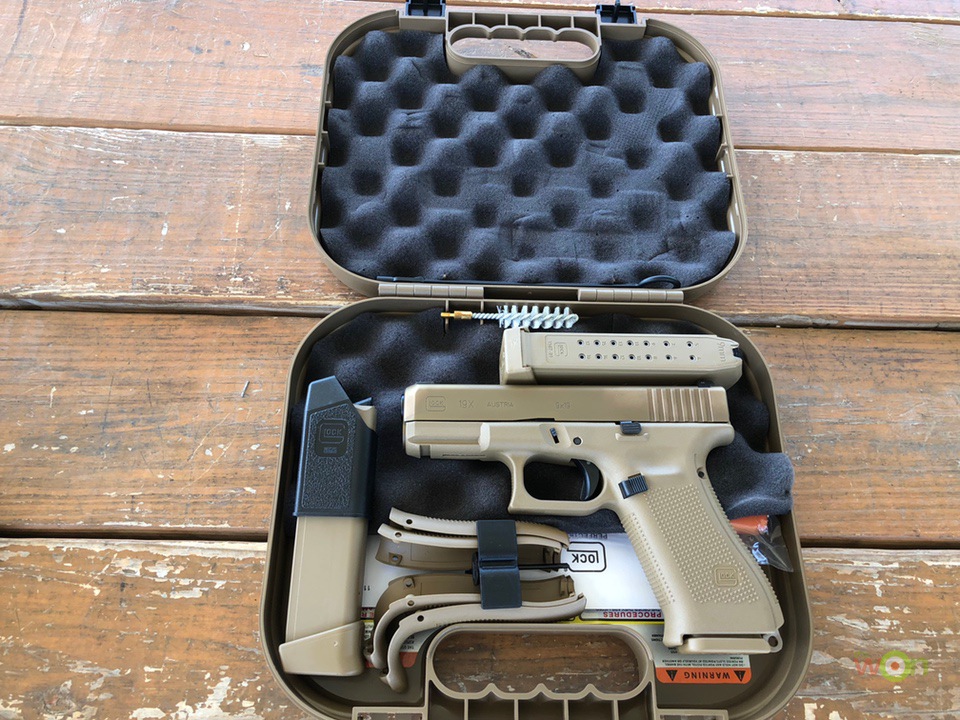
Glock built it for the US Army’s handgun competition: a full size G17 frame for a full firing grip, a compact G19 slide for a shorter, handier top end, a coyote finish, night sights, a lanyard loop, and a marksman barrel.
The Army went another way. The shooting public did not.
The crossover idea turned out to be what a lot of people had wanted all along, and Glock has been building variations of it ever since.
Glock 19X problems, then, come with a twist. The gun itself is a Glock, which means the mechanical core is about as proven as pistol designs get.
The problems live at the edges of the concept: a magazine well lip that rejects some of the company’s own newest magazines, a slide with no optics cut in a red dot world, ejection that misbehaves on a minority of guns, and a parts ecosystem that punishes anyone who assumes all Glocks share parts.
Let us work through them properly.
Quick verdict: The 19X is an excellent pistol with one genuinely silly flaw, the magazine lip, and you can work around it for the price of a baseplate. Everything else on this list is either a setup choice, a break in period, or an expectation to reset.
If you want this exact gun in black and without the lip, Glock makes it, it is called the G45, and this article will point you there honestly when that is the right answer.
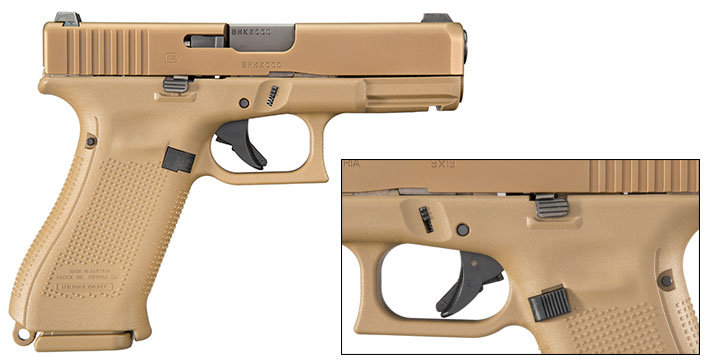
Table of Contents
Glock 19X Specs
Calibre: 9mm. Concept: full size G17 frame, compact G19 slide.
Barrel: Glock Marksman Barrel (GMB), 4.02 inches. Slide finish: coyote, nPVD coating.
Frame: coyote polymer, no finger grooves, flared magwell. Controls: ambidextrous slide stop levers.
Sights: Glock night sights, standard. Capacity: 17+1 standard magazine.
In the box: one 17 round magazine, two 19 round (17+2) magazines, coyote case. Extras: lanyard loop, four backstraps.
Optics ready: no, not on the original model. Overall length: about 7.4 inches.
Height: 5.47 inches. Weight: about 24.83 oz unloaded.
Origin: developed from Glock’s US Army trial entry.
Glock 19X Problems at a Glance
Gen5 magazines do not fit past the magwell lip. This affects every 19X, by design, and is medium seriousness.
Yes, you can fix it yourself. It costs a baseplate swap, or free with older mags.
No optics cut on the slide. This affects every original 19X, and is medium seriousness.
It needs a decision. It costs a dovetail plate to slide milling.
Erratic ejection, brass to face. This affects a minority of guns, and is medium seriousness.
You can partly fix it yourself. It costs armorer time, sometimes a part.
Break in feeding hiccups. This is common when new, and low seriousness.
Yes, you can fix it yourself. It costs a few boxes of 124 grain.
Coyote finish wears and shades never match. This affects most carried guns, and is low seriousness.
No, it is cosmetic. It is free to accept.
Gen5 parts do not swap with older Glocks. This affects every parts order, if careless, and is low seriousness.
Yes, buy carefully. It costs free discipline.
1. Gen5 Magazines Do Not Fit: The Famous Magwell Lip
Here is the one problem that belongs to the 19X and no other Glock. At the front of the magazine well, the frame has a small protruding lip.
It was part of the military specification thinking, a ledge at the front of the grip. And it sits exactly where the larger baseplate of a newer Gen5 magazine needs to be, so Gen5 magazines will not seat in a 19X.
They stop a few millimetres short of the magazine catch, and no amount of slapping fixes geometry.
Glock magazine specialists describe it the same way the owners do: the only substantial criticism aimed at this family is that lip, and the fact that it blocks the newer magazines. Read that again for the full absurdity.
The 19X cannot use some of its own generation’s magazines, from its own manufacturer, because of a lip of polymer the size of your thumbnail. The three magazines in the box fit, because they were shaped for it.
Gen4 and earlier magazines fit. Only the newer Gen5 pattern with its enlarged baseplate is locked out.
The later G45, which is Glock’s own second take on this concept, quietly deleted the lip.
How to fix Glock 19X magazine compatibility
- Start with what fits. The supplied magazines, one 17 round and two 19 round, are made for the gun. Older Glock 17 pattern magazines, Gen4 and earlier, seat and run fine. If your magazine collection is mostly older mags, you may never meet this problem at all.
- Swap the baseplates on your Gen5 magazines. The magazine bodies are the same. It is only the larger Gen5 baseplate that fouls the lip. Fitting the earlier, flatter baseplate style to a Gen5 magazine makes it a 19X magazine, and owners have done exactly this since launch week. Springs and followers stay as they are.
- Know about the permanent option, and think before taking it. Plenty of owners have removed the lip itself. Forum threads on the modification are a small industry: a sharp knife and sandpaper, five careful minutes, or a rotary tool with a sanding wheel used slowly and stopped often. Gunsmiths and custom shops will do it as part of frame packages. It works, and the gun looks like a G45 at the front afterwards. But it is irreversible, it will show in any resale listing, and Glock is entitled to frown at a modified frame. Do the baseplate math first. For most owners, a few baseplates are cheaper than a frame you can never uncut.
- Test every magazine you own at home. Unloaded, seat each one, confirm the catch engages, tug it, release it. The time to discover a magazine stops short is at your bench, not on a firing line with the slide locked back and an audience.
2. The Original 19X Is Not Optics Ready
The 19X was specified for a military trial that wanted iron sights, and it shows. The original model has no optics cut, no MOS plate system, nothing.
At launch that was a shrug. Today, when even budget pistols arrive milled, owners opening the coyote case are surprised, and more than one early reviewer said the same thing in print: the one thing this gun needed was a slide ready for a red dot.
Glock eventually agreed, after a fashion. The 19X MOS arrived years later as a separate model with the cut, a threaded barrel, and suppressor height sights.
That helps new buyers. It does nothing for the large number of original 19Xs already out there, so here are the real options for those guns, in the order most owners should consider them.
How to put a red dot on a Glock 19X
- Decide your footprint before anyone cuts anything. Milling is forever and it is footprint specific. The RMR pattern is the default choice for a reason: the widest choice of optics, including the Holosun 507C family and Trijicon’s own sights. Choose the optic class first, argue about models second.
- Have the slide milled by a shop that does it daily. A proper milling job cuts the pocket, refinishes the slide, and keeps the rear sight options you choose. It costs real money and takes real weeks, and done by a specialist it is the strongest, lowest, best solution by a distance.
- Use a dovetail mount plate only as a trial. These replace the rear sight and carry the optic high above the slide. They are reversible and cheap, which makes them a legitimate way to answer the question of whether you even like shooting with a dot before committing the slide. They are not the equal of a milled slide for serious use, and the article will not pretend otherwise.
- Or trade into the MOS model. If your 19X is unfired or nearly so, the honest maths sometimes favour selling it and buying the factory MOS version rather than paying for milling. Run your local numbers before deciding. Sentiment is a fine reason to mill. It is a poor reason to avoid comparing prices.
3. Erratic Ejection and Brass to Face
Most 19Xs eject the way Glocks are famous for ejecting, in a neat pile to the right. A minority do something ruder.
Empties come back at the shooter’s face, dribble down the slide, launch straight up, or scatter in every direction from one magazine to the next. Owners call it brass to face, and the forums carry years of it across the Glock line, the 19X included.
The explanation armourers give most often is about control of the empty case. As the slide opens, the extractor is supposed to hold the case firmly until the ejector kicks it clear.
On the misbehaving guns, the case is held loosely, floats, and gets bounced around the ejection port before it leaves, which is why the direction is random rather than merely weak. That is also why telling the owner to simply grip harder does not fix guns that do it for every shooter.
What to do about brass to face on a 19X
- Change the ammunition first. Ejection behaviour moves with ammunition power and bullet weight. A gun that dribbles cases on mild 115 grain range loads may eject smartly on standard pressure 124 grain. Test before you accuse parts.
- Do the magazine out test. Fire a round with the magazine removed, over a bench where you can watch the case. A case that falls straight down through the magazine well instead of ejecting sideways is the classic sign the extractor is not holding it, and that is diagnostic gold to hand an armorer.
- Take it to a Glock armorer, not a parts cannon. The armorer’s checklist for this complaint is established: extractor condition and tension, the ejector pattern fitted, and the recoil spring assembly’s health. One part at a time, tested, beats three parts at once and no idea which one mattered.
- Use Glock customer service without embarrassment. A gun that throws brass at the shooter’s face for every shooter, on good ammunition, is not a training issue, whatever the internet tells you. Glock’s service department has seen this film before. Let them fix their pistol.
4. Break In Feeding Hiccups on a New Gun
New 19X, first range trip, a couple of failures to feed, and the owner goes home worried he bought a lemon. He almost certainly did not.
He bought a new Glock with stiff magazine springs, a tight action, and a box of the cheapest 115 grain ammunition the shop sells, and the combination underwhelms for the first few hundred rounds.
Troubleshooting guides for this exact gun keep landing on the same two suspects: magazines and ammunition. Feeding trouble traces to followers that need inspecting, magazine springs that need to settle or eventually be serviced, and ammunition the gun dislikes, hollow points included on some individual pistols.
Forum advice for new Glock feeding complaints adds the maker’s own line: put at least 200 rounds through it before judging it.
How to break in a 19X properly
- Feed it full power 124 grain FMJ for the first few hundred rounds. Save the bargain mild loads and the exotic hollow points for after the gun is settled. You are giving the recoil spring, the magazines, and the feed path an honest workload to bed in against.
- Load the magazines fully and leave them loaded for a few days. New Glock magazine springs are stiff enough to cause misfeeds and sore thumbs in equal measure. A few days at full compression takes the edge off the stiffness. A magazine loader is not cheating, either.
- Mark your magazines. Number them on the baseplate with a paint pen. If a stoppage repeats, knowing whether it follows one magazine or happens with all of them is the difference between a ten minute fix and a week of guessing.
- Clean and lubricate by the manual, and leave the copper grease alone. New Glocks ship with a copper coloured lubricant that is meant to wear away in use. Clean the gun normally, lubricate the points Glock specifies, lightly, and do not detail strip a new pistol hunting for a problem that a few boxes of ammunition were about to solve.
5. The Coyote Finish Wears, and the Two Coyotes Never Matched
Let us handle the cosmetics honestly, because owners bring this up constantly and reviewers tiptoe around it.
The 19X is two different colours wearing one name. The frame is coyote polymer. The slide is coyote nPVD coating over steel, and next to each other they are plainly different shades, a flatter tan below and a warmer, almost bronze tint above.
Owners noticed at launch, described the slide in terms best left off a family website, and have joked about it since. If you are buying the gun partly for the look, look at one in daylight first, because photographs flatter the match.
The second half is wear. A coloured coating on a working pistol shows holster wear at the muzzle and slide edges sooner, visually, than a black slide shows the same amount of wear, simply because worn edges contrast more against the colour.
This is not the coating failing. The nPVD layer is there to resist corrosion and chemicals, and it keeps doing that job after the colour thins at contact points.
A carried 19X develops honest wear marks. So does every carried gun. This one just photographs them better.
Living with a coyote Glock
- Buy it for the format, not the paint. The grip, the slide length, the barrel and the sights are the gun. The colour is a bonus that will age.
- Slow the wear with a properly fitted holster. A holster moulded for the 19X and G45 shape, without grit trapped inside it, wears a finish far more gently than a universal holster the gun swims in.
- Keep solvents appropriate. Clean the slide with normal gun solvents, keep aggressive chemicals off the polymer frame, and wipe the gun down after wet or sweaty carry days. Corrosion resistance is a coating plus a habit, not a coating alone.
- If it truly bothers you, the G45 exists. Same crossover concept, black finish, no magwell lip, and factory optics ready versions. Glock built the sequel. There is no shame in preferring it, and this site will not pretend the 19X is the only answer.
6. Gen5 Parts Do Not Swap With Older Glocks
This one costs owners money quietly. For decades, part of the Glock charm was a giant shared parts bin: barrels, slides, triggers and small parts swapped across generations with well known rules.
The 19X is built on Gen5 architecture, and Gen5 changed the rules more than the brochures suggested.
Launch era owners warned each other about it plainly: apart from magazines, Gen5 parts do not swap with previous generations. The barrels differ, the slides do not interchange, and under the skin the changes continue.
The Gen5 marksman barrel uses a different locking arrangement, the ambidextrous slide stop brings its own spring arrangement, the recoil spring is the dual assembly, and trigger components are Gen5 specific. So the owner who buys a bargain Gen3 trigger kit, a spare Gen4 barrel, or a used slide at a gun show, confident that a Glock is a Glock, is buying shelf decorations.
How to buy parts for a 19X without wasting money
- Filter every search by generation. If the listing does not say Gen5, or 19X, or G45, assume it does not fit until you have checked. The ten seconds of reading saves the return postage.
- Be careful with complete slides and barrels especially. These are the expensive mistakes. A Gen5 slide runs on a Gen5 frame with Gen5 internals, and the marksman barrel is not a drop in swap with earlier 19 barrels.
- Keep the take off parts labelled. When you do upgrade something, bag and label the factory parts with the model and generation. Future you, or a future buyer, will be grateful, and factory parts restore resale value better than any aftermarket collection.
- Ask the maker, not the marketplace listing. Glock parts suppliers and the bigger Glock specialists list compatibility by generation precisely because this trips people up. Use their charts rather than a seller’s optimistic title.
Glock 19X Problems That Are Not Really Faults
The lanyard loop. It is a loop of polymer at the heel of the grip, left over from the military specification, and some shooters feel it under their palm.
Soldiers attach pistols to themselves with lanyards. The rest of us can ignore it, and many owners do exactly that for the life of the gun.
It prints more than a Glock 19. The full length grip is longer, so it shows under a light shirt more than the compact frame does.
That is not a flaw in the 19X. That is the entire product. You traded concealment for a full grip and 17 rounds, knowingly.
The trigger feels like a Glock trigger. It does. It is the standard Gen5 Safe Action unit, serviceable, predictable, and nobody’s favourite.
It also improves with rounds fired and costs nothing to learn. Judge this gun against other service pistols, not against a tuned competition trigger it never claimed to have.
The sights are basic. They are metal, they are night sights, and they came fitted to a pistol whose siblings often ship with plastic placeholders.
By Glock standards this is a generous specification, and it deserves to be said in the gun’s favour.
Glock 19X Maintenance Checklist
- Test every magazine for seating at home, especially newer Gen5 magazines
- Break in on full power 124 grain ammunition, and mark your magazines
- Number magazines so a repeating stoppage can be traced to one
- Clean and lightly lubricate the points Glock specifies, no more
- Keep aggressive solvents off the polymer frame
- Wipe the slide down after wet or sweaty carry
- Buy every replacement part by generation: Gen5, 19X, G45
- Keep factory take off parts bagged and labelled
Is the Glock 19X Still Worth Buying?
Yes, and the sales history suggests the market settled this question years ago.
Strip the article back and look at what remains. A magazine lip with a five dollar workaround. An optics decision that every pre MOS pistol owner faces.
A minority ejection complaint with an established armorer path. A break in period. Cosmetics. A parts catalogue to read carefully.
Against that: one of the most accurate factory barrels Glock fits, a grip that fits full size hands properly, night sights in the box, three magazines in the box, and the deep boring reliability that made the format successful enough for Glock to build a whole crossover family on it.
Buy the 19X if you like the coyote gun and your magazine stash is compatible. Buy the G45 if you want the same idea in black with the lip deleted and optics cuts available.
Either way you are buying the format that won, and the problems in this article are the smallest price it charges.
Conclusion
Glock 19X problems are the problems of a specification, not a pistol.
The Army trial asked for a lanyard loop, a particular magazine well, iron sights, and a coyote gun, and Glock delivered exactly that, then sold it to the rest of us.
Some of those military choices became civilian quirks: a lip that rejects new magazines, a slide with nowhere to put a dot, a colour scheme made of two almost matching tans. Underneath the specification sits a thoroughly proven pistol with a superb factory barrel, and nothing in this article changes that.
Work around the lip, decide about the optic honestly, break it in on real ammunition, and buy your parts by generation. Do those four things and the 19X is what its owners keep saying it is: the Glock that fits like it should.
Tier 1 of this series ends here, and it ends on the gun with the biggest search volume of the lot. If your 19X has shown you a problem this article missed, the comments are where it belongs.
Sources used for this article: the Ronin’s Grips Glock archive, AR15.com owner threads on the magwell modification and brass to face, XTech Tactical and The Gun Zone magazine guides, Craft Holsters, BestRedDotSight and The Wild Hunter troubleshooting guides, a TRB Glock troubleshooting reference, The High Road owner discussions, and Glock retailer specification listings. Last updated: October 2026.
FREQUENTLY ASKED QUESTIONS
The 19X frame has a small protruding lip at the front of the magazine well, and the enlarged baseplate on newer Gen5 magazines hits it before the magazine can seat. The magazines supplied with the gun fit, and Gen4 and earlier magazines fit. For Gen5 magazines, swapping to the earlier flatter baseplate solves it. Removing the lip is the permanent option owners discuss, and it is irreversible.
Not from the factory on the original model, which has no optics cut. Your options are having the slide milled for a footprint, usually the RMR pattern, using a rear sight dovetail plate as a reversible trial, or moving to the later 19X MOS model which is cut at the factory. Decide the footprint before any milling, because the cut is permanent.
On the minority of guns that do it, the usual cause is the extractor not holding the empty case firmly until the ejector kicks it out, so the case rattles around the port and leaves in a random direction. Test with standard pressure 124 grain ammunition first, try the magazine out test to check extractor hold, and then let a Glock armorer inspect the extractor, ejector, and recoil spring rather than swapping parts at random.
Yes. Once past the first few hundred rounds, its reliability is standard Glock, which is the benchmark the rest of the market is measured against. Early feeding hiccups are usually stiff new magazines and mild ammunition, and the fix is full power 124 grain loads, magazines left loaded for a few days to settle, and each magazine marked so a problem one can be isolated.
They share the crossover concept, full size frame and compact slide. The G45 is black, deletes the magazine well lip so all Gen5 magazines fit, drops the lanyard loop, and is widely available in MOS optics ready form. The 19X is the coyote original with night sights, a lanyard loop, and the lip. Choose the 19X for the original package, the G45 for the updated one.
The slide’s nPVD coyote coating shows holster wear at the muzzle and edges over time, and worn areas are more visible against the colour than on a black slide. That wear is cosmetic. The coating’s job is corrosion and chemical resistance, which it keeps doing. Also expect the slide and frame to be slightly different shades of coyote from new. They were never an exact match.
Gen4 and earlier Glock 17 magazines work, and they are what the gun’s frame was shaped around. Newer Gen5 Glock 17 magazines have the larger baseplate that fouls the magwell lip, so they need a baseplate swap to seat. The 19X’s own magazines also work in a Glock 17 and Glock 19, sticking out of the shorter 19 grip.